

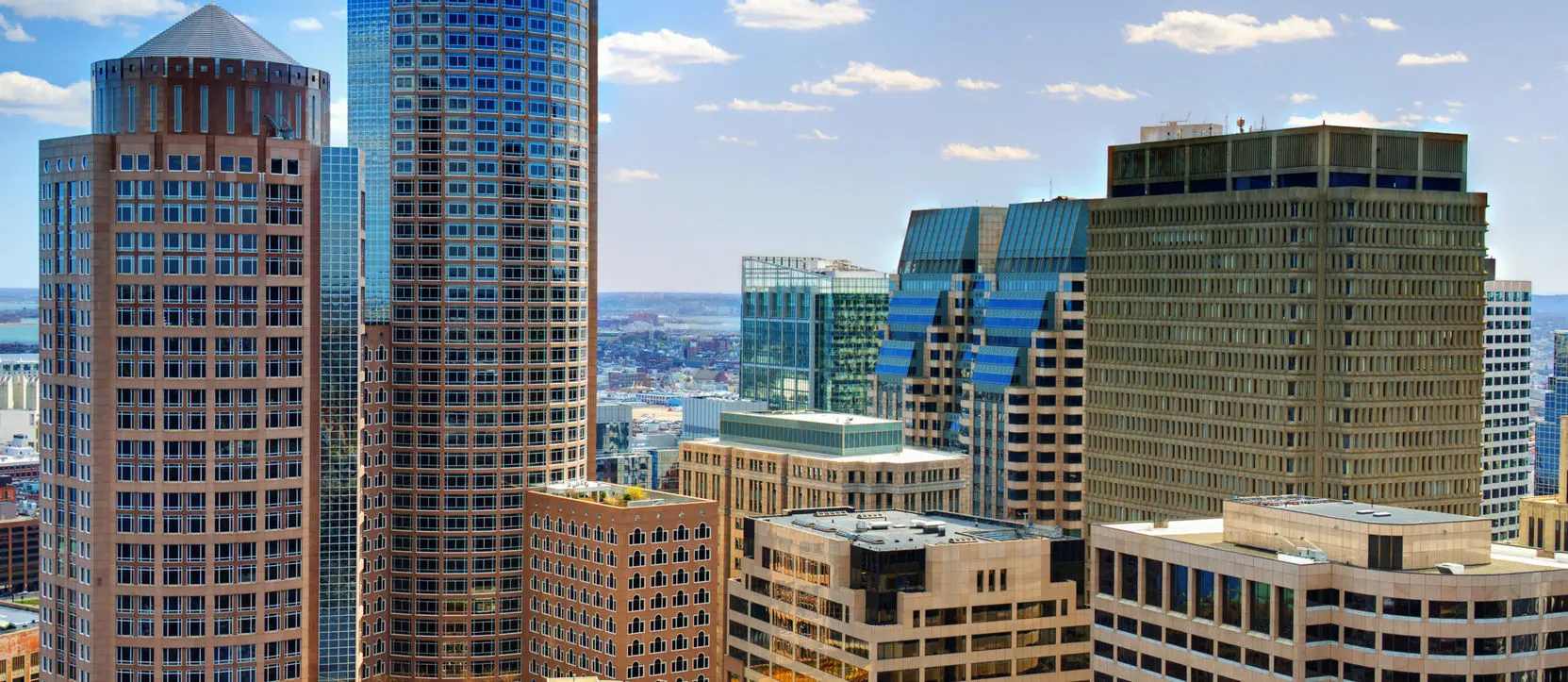
Boston office space investment is not for the faint of heart in today’s real estate market. An old investing adage says to, “buy when there’s blood in the streets, even if the blood is your own.” Increasingly, we’re seeing risk-tolerant developers adopt this mindset on what might be the bloodiest real estate class on the market today: prestige, urban core office space, which has gone from perennially in-demand to overabundant thanks to the pandemic-fueled remote work revolution. The Boston Globe recently profiled an investor betting big on a revival of demand for flagship office space in Boston’s historic Financial District and Downtown Crossing neighborhoods, and it’s a big bet indeed: a $350 million office tower, 22 stories tall, with room for 1,700 workers. It’s the first large, non-laboratory office project proposed for downtown Boston since the start of the COVID-19 crisis.
Why Boston Office Space Investment May Still Make Sense
Should projects like this be considered pie-in-the-sky naïve? Not necessarily. The pandemic has undoubtedly altered work patterns forever, but those trends are not absolute. Workforce experts, business school professors, and senior managers increasingly forecast a hybrid model for the post-pandemic landscape. In this model, employees have greater flexibility to work remotely while remaining loosely tethered to a traditional office. Companies may use the office for occasional team meetings and collaborative events rather than day-to-day work.
Under this system, companies need less flagship office space in dynamic urban hubs like Boston, but the demand has not disappeared. Smaller space requirements may also allow more companies to access these environments.
How Office Design Is Adapting to a Hybrid Future
The design of commercial real estate is also adapting to this new system. Developers are proposing new projects, while property owners retrofit existing buildings with advanced ventilation and filtration systems to reduce health risks for in-person work.
Fewer employees in the office at one time also make sustainability improvements easier to achieve. Companies can more easily implement energy efficiency and decarbonization measures. This shift helps more projects align with growing net-zero standards among policymakers.
At the same time, some advantages of office space cannot be replicated at home. Ultra-modern amenities and proximity to cultural and social attractions remain major draws in cities like Boston.
Developing traditional office space during the pandemic still requires a leap of faith. However, the BG Strategies team has helped dozens of similar projects succeed despite changing market conditions and economic transitions.
If you are considering going all-in on office space at this moment of high risk and high reward, we have the knowledge and tools to help you succeed.