

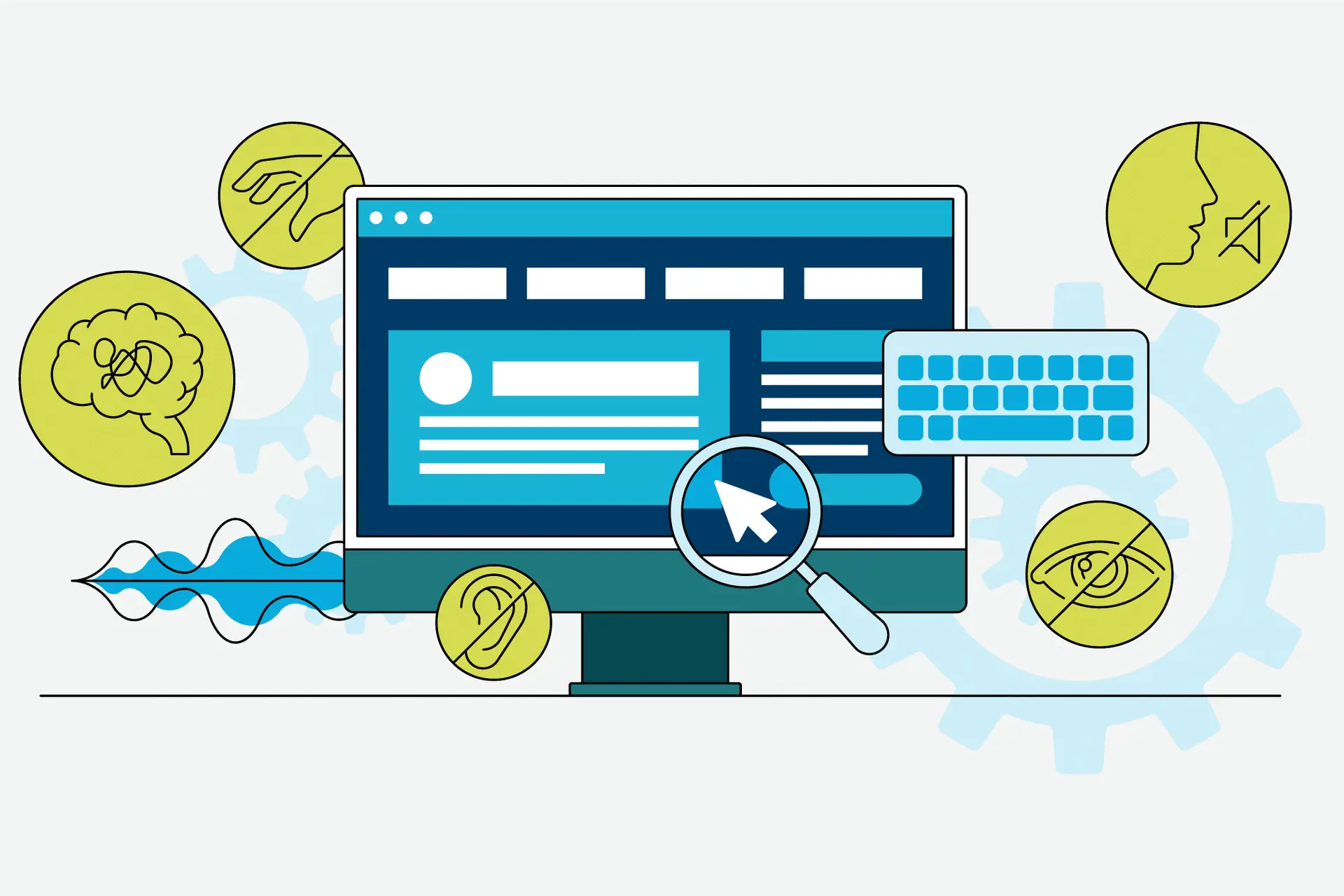
Accessibility in design is no longer a nice-to-have. It’s essential. As more of our lives shift online, the responsibility to create inclusive digital experiences falls heavily on creative teams.
Why it Matters
More than one billion people around the world live with some form of disability. That includes visual, auditory, cognitive, and motor impairments, all of which can affect how someone experiences a website, ad, or brand touchpoint. But accessible design isn’t just for people with disabilities. It helps everyone. Captions support people watching videos on mute. Strong contrast helps with screen glare. Simple navigation makes content easier to find and use across all devices.
When we design for accessibility, we improve the experience for everyone. That’s good design.
How We Approach Inclusive Design
Creating accessible work requires intention from the very beginning. It’s built into our creative process from concept to final delivery. Here are some of the ways we make sure our work is inclusive.
Color and Contrast
We use tools to test contrast ratios and ensure text stands out clearly against backgrounds. This helps users with low vision or color blindness, but it also improves readability in everyday situations, like looking at a phone in bright sunlight.
Clear Structure and Hierarchy
Good design should guide the eye naturally. We rely on visual hierarchy to lead users through content — using size, spacing, and layout rather than just color or style. This benefits users with screen readers and those scanning quickly for information.
Alt Text and Image Descriptions
Every visual element should have context. We write alt text that’s short, descriptive, and meaningful, making sure users with screen readers still understand the message and purpose of each graphic or photo.
Keyboard Navigation
We test interactive components like buttons, forms, and menus to make sure they can be used without a mouse. This improves the experience for users with mobility challenges and also works better across devices.
Inclusive Language and Representation
Design is more than visuals. The words we choose and the people we represent in photography and illustration matter. We think carefully about language and imagery to make sure our work reflects the diverse communities we serve.
Everyone Plays a Role
While our creative team leads accessibility implementation, the responsibility is shared across disciplines. Strategy, development, content, and client teams all play a role in making inclusive design successful. It works best when it’s baked in early — not added on later.
The Value of Accessible Design
Accessibility helps brands reach wider audiences. It improves usability, enhances search performance, and reduces legal risk. But more than anything, it shows respect. It signals that your brand values every individual and is willing to put in the effort to meet people where they are.
Final Thoughts
Accessible design is not a limitation. It’s an opportunity to be thoughtful, inclusive, and human-centered. Designing for accessibility results in stronger, smarter, and more effective creative work and that benefits everyone.